
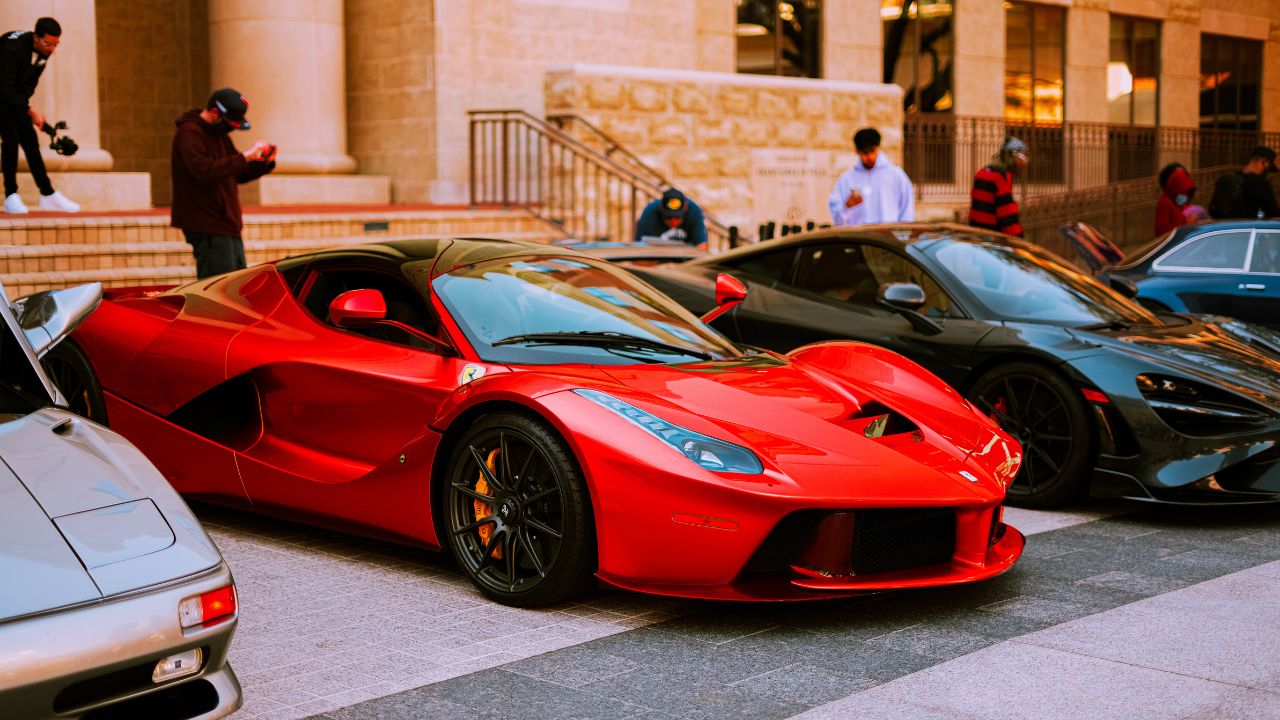
A $30,000 Camry and a $150,000 Porsche don’t depreciate the same way after an accident. Standard vehicles may lose roughly 6-10% of their pre-accident value, while luxury vehicles can routinely lose up to 15-25%. Exotic supercars can lose 30-50% or more, creating financial gaps that insurance companies rarely volunteer to cover.
The depreciation curves diverge because luxury buyers evaluate accident history differently than standard vehicle buyers. This article explains why the gap exists, where it shows up by category, and how to recover lost value luxury vehicle owners are entitled to claim.
Key Takeaways
- Luxury vehicles may lose 15-25% value after accidents; exotic supercars can lose 30-50% or more
- Diminished value typically exceeds repair costs by three to eight times on luxury vehicles
- Buyer psychology, technological complexity, and premium materials drive the depreciation gap
- Rule 17c insurance formulas systematically undercount actual market losses on luxury claims
- Independent appraisals and skilled legal representation secure significantly higher settlements
Quick Answer: Luxury Loses More – A Lot More
Standard vehicles experience accident diminished value losses between 6-10% of pre-accident market value. Luxury sedans like the Mercedes S-Class and BMW 7-Series may lose 15-25%, while sports luxury models, including the Porsche 911 and AMG variants, fall into the same range. Luxury electric vehicles such as the Taycan and Model S suffer 18-30% losses, the highest of any mainstream segment.
Exotic supercars, including Ferrari, Lamborghini, and McLaren models, experience the steepest depreciation at 30-50% or more. Diminished value on luxury vehicles typically exceeds repair costs by a factor of three to eight. This multiplier effect creates the recovery gap most owners discover only after insurance claim luxury cars adjusters close the file.
Worked Example: Where the Gap Hides
A $150,000 Porsche 911 sustains $7,200 in collision repairs following a moderate accident. The insurance carrier pays the repair bill and considers the claim resolved. The actual market loss reaches $30,000-$45,000 because buyers discount luxury vehicles with accident histories far more aggressively than standard vehicles.
The same accident on a $30,000 standard sedan produces roughly $1,800-$3,000 in diminished value. The curves are fundamentally different because luxury buyers pay for prestige and perfection, not just transportation.
Average Claim Sizes Reflect the Gap
The national average diminished value claim across all vehicle types settles near $1,500. Luxury vehicle claims typically range from $5,000 to $50,000, depending on brand, model, and damage severity. Exotic supercar claims frequently exceed $100,000 when structural components are involved.
The gap between average and luxury claim values reflects buyer psychology and market realities. Standard vehicles absorb accident history with smaller market penalties; luxury and exotic vehicles cannot.
Buyer Psychology and Brand Stigma
A majority of buyers actively avoid vehicles with accident history, and the effect amplifies in the luxury market. Smaller, more discerning buyer pools punish accident records more aggressively because brand prestige forms a major part of the purchase decision. Many luxury buyers cite emotion-based factors as their primary purchase reason, and accident history erodes that emotional value disproportionately.
Some buyers also cite brand reputation as their primary consideration when evaluating luxury vehicles. Accident history damages brand-prestige value, not just mechanical value, which explains why the same accident produces a 7% loss on a Camry and a 22% loss on a comparable luxury sedan.
Technological Complexity
Luxury vehicles carry more complex electronics, sensors, and advanced driver assistance systems than standard vehicles. Forty percent of buyers worry specifically about the long-term reliability of complex sensors and wiring after collision repair. Even flawless repair can’t fully satisfy buyer concerns about long-term sensor and electronic reliability.
The suspicion follows the car regardless of repair quality. Standard vehicles have less technology to second-guess, so the buyer discount remains smaller, and accidents produce less severe depreciation curves.
Materials, Repair Standards, and Documentation
Aluminum spaceframes, carbon fiber panels, and composite materials require factory-authorized facilities to be repaired correctly. Aftermarket parts on luxury vehicles drive larger diminished value losses than on standard vehicles because luxury buyers and dealers discount non-original components more aggressively. Standard vehicles can absorb aftermarket repair with smaller market penalties; luxury and exotic vehicles cannot.
Many buyers cite hidden frame or chassis damage as their top concern. The higher the vehicle’s value, the more financially significant that concern becomes, which explains why luxury car depreciation accelerates after structural repairs.
Insurance Formula Mismatch
Rule 17c is the 10% base formula insurers default to: a maximum 10% of pre-accident value with deductions for mileage and damage severity. For standard vehicles, Rule 17c roughly approximates reality and produces settlements close to actual market losses. For luxury vehicles, it systematically undercounts because the formula was never designed for steeper, longer, more buyer-driven depreciation curves.
On a $300,000 exotic car, a 10% cap equals $30,000 when actual market loss on structural damage routinely exceeds $100,000. The formula mismatch creates the single largest obstacle luxury owners face when pursuing successful settlements for DV-LOU cases through at-fault carriers.
Exotic Supercars (Ferrari, Lamborghini, McLaren)
Exotic supercars experience greater losses, with claims frequently exceeding $100,000 following moderate accidents. Compromised structural integrity at high speeds is the buyer’s top fear, and collectibility takes the biggest hit. Limited-production exotics depreciate the fastest because their resale market is the most selective.
Buyers in this segment demand perfection and unbroken provenance. Any accident history, regardless of repair quality, fundamentally damages the vehicle’s story and market position.
Luxury Sedans and Sports Luxury (S-Class, 7-Series, Porsche 911, AMG)
Luxury sedans and sports luxury models lose 15-25% of pre-accident value following collisions. Long-term reliability of complex electronic and comfort systems concerns buyers most in this category. Brand-specific service histories matter heavily for resale, and gaps or non-authorized repairs depress value further.
These vehicles occupy a middle position between standard and exotic segments. The depreciation curve is steep enough to create five-figure losses but not as extreme as the exotic supercar market.
Luxury Electric Vehicles (Porsche Taycan, Tesla Model S)
Luxury electric vehicles suffer 18-30% losses, the highest of any mainstream segment. Battery health concerns drive a unique discount that doesn’t exist for combustion vehicles. Buyers fear thermal events and post-collision and software calibration issues with advanced driver assistance systems.
The luxury EV depreciation curve is distinct from gas-powered luxury because of battery uncertainty. Even minor accidents raise questions about battery pack integrity that resale buyers cannot easily verify.
Standard Vehicles (Baseline for Comparison)
Standard vehicles experience 6-10% losses tied mostly to vehicle history report stigma rather than technological, brand, or material cost factors. The market penalty exists but remains relatively small because buyers prioritize function over prestige. The gap between this baseline and luxury depreciation is the heart of the problem.
Standard vehicle owners face a different recovery landscape. The difference explains why luxury owners need a fundamentally different strategy when “what do I do after a car accident?” becomes the immediate question.
Get a Market-Based Appraisal – Not Rule 17c
Independent appraisers adjust for brand prestige, model rarity, technological complexity, repair quality, and regional buyer behavior. None of these factors appear in Rule 17c calculations, which is why professional appraisals return multiples of their cost in added recovery. On luxury claims, the appraisal becomes the foundation for proving actual market loss.
Appraisers compare your vehicle to similar models without accident history in your regional market. This data-driven approach counters the insurance carrier’s assertions that Rule 17c represents fair compensation.
Document Pre-Accident Condition and OEM Repair Quality
Pre-accident photos, service records, and maintenance history establish baseline value before the accident occurred. Factory-authorized repair documentation defends the resale story against buyer skepticism about repair quality. Insist on original equipment manufacturer parts because aftermarket components drive larger losses and weaker negotiating positions.
Documentation quality directly impacts settlement outcomes. Comprehensive records demonstrate that your vehicle commanded premium value before the accident and received premium-quality repairs afterward.
Submit a Demand Letter to the At-Fault Carrier
Include accident facts, fault evidence, the appraisal, comparable sales data, and total damages in a formal demand letter. Send via certified mail with return receipt and specify a 35-day response window. Keep written copies of every communication to establish a clear timeline if the claim escalates.
The demand letter formalizes your position and triggers the insurer’s obligation to respond. Most carriers make an initial offer at this stage, though the first response rarely reflects full market value.
Know When to Retain a Skilled Diminished Value Attorney
Lowball responses, silence, or Rule 17c stonewalling signal it’s time to escalate with legal representation. Represented claimants secure significantly higher gross settlements on five- and six-figure diminished value claims. Contingency representation removes the financial risk of pursuing full value, making professional help accessible regardless of current financial position.
Legal representation becomes particularly impactful when the gap between the insurer’s offer and market reality exceeds $25,000. Skilled attorneys understand how to counter Rule 17c formulas with market-based evidence and contact at-fault carriers with the leverage necessary to secure fair settlements.
Recover What Your Luxury Vehicle Lost
The depreciation gap between standard and luxury vehicles is the difference between a $1,500 claim and a $50,000-plus claim. Insurers rarely volunteer the larger figure, and Rule 17c formulas systematically undercount what luxury and exotic vehicles actually lose in the market. Kerr Law Firm helps Orange County owners understand why the curves diverge and how to prove actual losses, giving them the foundation to pursue full recovery.
Kerr Law Firm has served Orange County for 45 years, focusing on diminished value and loss of use claims that other practices often overlook. With a 4.8-star rating from 144+ verified reviews and numerous peer attorney referrals, the firm handles complex luxury vehicle claims on a contingency basis. No fee applies unless recovery is secured, and free consultations provide honest assessments even when cases are better suited for small claims court.
Start your diminished value claim with Kerr Law Firm today to determine what your luxury vehicle lost and how to recover it from the at-fault carrier.
Frequently Asked Questions
Why do luxury cars depreciate so much more than standard cars after an accident?
Luxury buyers purchase brand prestige and perfection, not just transportation. Accident history damages the emotional and aspirational value that drives luxury purchases, creating steeper depreciation curves than function-focused standard vehicle markets.
Is the Rule 17c calculation fair for luxury vehicles?
Rule 17c systematically undercounts luxury vehicle losses because the formula caps diminished value at 10% of pre-accident value. Actual market losses on luxury and exotic vehicles routinely exceed this cap by multiples, particularly when structural components are involved.
How can I prove the depreciation gap to the insurance company?
Independent appraisals provide market-based evidence of actual value loss by comparing your vehicle to similar models without accident history. Comparable sales data from your regional market demonstrates what buyers actually pay and how they discount accident history.
Do I need an attorney for a luxury diminished value claim, or can I file on my own?
Self-representation works when insurers offer settlements close to actual market value, but most luxury claims require legal representation to overcome Rule 17c limitations. Attorneys working on contingency remove financial barriers and typically secure settlements that exceed self-negotiated outcomes by substantial margins.
