
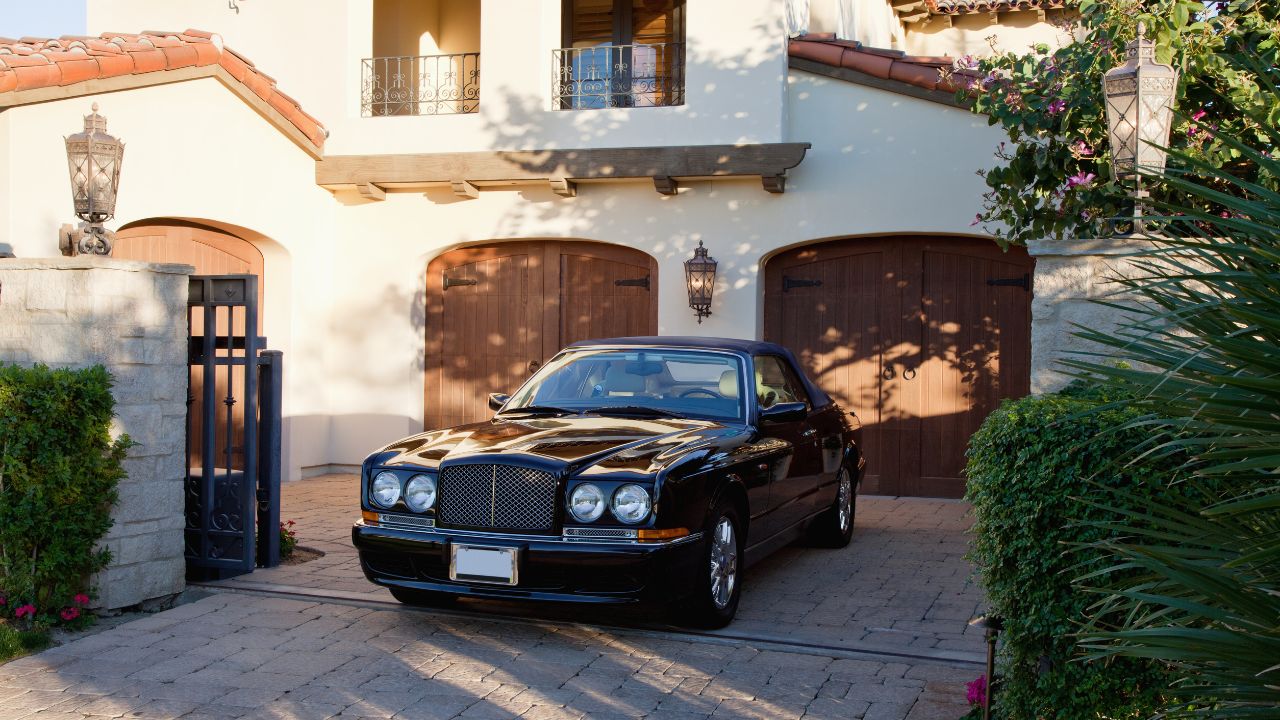
California luxury and exotic vehicle owners face significant financial exposure following motor vehicle accidents. A Ferrari, Lamborghini, or Bentley involved in even a minor car accident can lose 25% to 50% of its pre-accident market value, translating to six-figure losses that insurance companies often resist acknowledging.
The global luxury car market reached $741.1 billion in 2025 and projected growth to $1,145.8 billion by 2033. As these high-value assets proliferate across California’s roads, understanding diminished value claims in California legal frameworks becomes essential for protecting substantial investments.
Key Takeaways
- Luxury vehicles lose 25-50% of pre-accident value compared to 5-10% for standard cars
- California allows three years to file third-party diminished value claims under tort law
- First-party claims are heavily restricted in California insurance policies
- Professional representation achieves 99% success rates versus 25% for self-representation
- The 17c formula undervalues luxury claims by capping losses at 10%
What Is Diminished Value for Luxury and Exotic Vehicles?
Diminished value represents the measurable reduction in a vehicle’s market value after an accident, persisting even after manufacturers complete all repairs to factory specifications. This loss reflects buyer reluctance to pay the full market price for vehicles with accident histories.
The concept applies to all vehicles but creates a disproportionate financial impact for ultra-luxury segments. Standard vehicles typically experience 5% to 10% value reduction, while exotic cars suffer dramatically steeper declines.
How Does Diminished Value Affect Ferrari, Lamborghini, and Bentley?
Ferrari entry-level models start between $250,000 and $300,000, establishing baseline values that amplify any percentage-based loss calculations. Lamborghini entry-level models range from $241,843 to $273,880, while Bentley models begin at $207,050 to $223,000.
A $400,000 Ferrari could suffer diminished value between $100,000 and $200,000 after a collision. Ultra-luxury and exotic vehicles routinely lose 25% to 50% of their pre-loss value due to heightened buyer scrutiny in these specialized markets.
Why Is Diminished Value More Significant for Ultra-Luxury Cars?
Standard vehicles typically lose 5% to 10% of their value after an accident, reflecting general consumer acceptance of repaired vehicles. Ultra-luxury and exotic vehicles can lose 25% to 50% of their pre-loss value because buyers in these segments demand pristine ownership histories.
A single accident can erase 25% to 50% of an ultra-luxury vehicle’s market value regardless of repair quality. A $400,000 exotic vehicle can suffer $100,000 to $200,000 in luxury car diminished value, creating claims that dwarf typical automotive insurance disputes.
What Are the Typical Market Impacts After an Accident?
The global luxury car market, valued at $741.1 billion in 2025, continues to expand rapidly. The global luxury car market is projected to reach $1,145.8 billion by 2033, demonstrating sustained growth in high-value automotive assets.
The supercar segment expects growth from $20.41 billion in 2026 to $27.93 billion by 2031. The US luxury and exotic car market currently stands at $110 billion, with projections indicating expansion to $180-$215 billion by 2035.
Who Are the Typical California Luxury Car Owners and What Drives Their Claims?
California luxury vehicle owners represent a distinct demographic with concentrated geographic distribution and specific financial priorities. These owners pursue diminished value claims because they understand the substantial economic impact accidents create for high-value assets.
The state’s affluent population and favorable climate conditions support one of the nation’s largest exotic car markets. Rising insurance premiums and claim sophistication drive increased pursuit of full financial recovery.
What Demographics Dominate Supercar Ownership in California?
The 35-49 age group accounts for 42% of supercar ownership, representing established professionals with significant disposable income. Supercar ownership remains approximately 93% male, though this gender distribution gradually shifts as market dynamics evolve.
The supercar segment includes prestigious brands like Ferrari and Lamborghini, attracting buyers seeking performance and exclusivity. These owners typically maintain multiple vehicles and possess heightened awareness of asset valuation factors.
How Do Consumer Priorities Influence Diminished Value Decisions?
Approximately 66% of consumers prioritize premium costs in insurance decisions, focusing on policy expenses during initial coverage selection. However, 60% of consumers cite coverage options as the most important factor when evaluating claim recovery potential.
Auto insurance premiums increased 17.8% in 2024, intensifying policyholder attention to claim recoveries and benefit maximization. This premium pressure drives luxury vehicle owners to pursue comprehensive diminished value after an accident compensation rather than accepting the insurer’s initial offers.
Where Is Luxury Car Ownership Most Concentrated in California?
California, Florida, and Texas represent the largest luxury vehicle markets in the United States, with California leading in total ownership concentration. Within California, ownership clusters heavily in coastal metropolitan regions where wealth concentration and luxury dealership networks align.
Orange County, Los Angeles County, and the San Francisco Bay Area account for the majority of exotic vehicle registrations. This geographic concentration creates specialized legal markets where Orange County diminished value claim attorney practices develop focused knowledge of luxury vehicle recovery processes.
What Are California’s Legal Frameworks for Diminished Value Claims?
California’s legal structure separates diminished value claims into distinct categories with different recovery prospects and procedural requirements. Understanding these frameworks determines which compensation pathways remain available after specific accident scenarios.
The state’s tort law and insurance regulations create opportunities and restrictions that differ substantially from those of other jurisdictions. California Code provisions establish specific timelines and requirements that impact claim viability.
What Is the Difference Between First-Party and Third-Party Claims in California?
First-party claims are filed against the owner’s own insurance policy, seeking compensation from collision or comprehensive coverage. Third-party claims are filed against the at-fault driver’s insurance, pursuing recovery through liability provisions.
First-party diminished value claims face heavy restrictions in California because most policies exclude this coverage explicitly. Most California insurance policies explicitly exclude diminished value coverage for first-party claims, making third-party pursuit the primary recovery avenue.
California law allows third-party diminished value claims against at-fault parties’ insurers under tort principles. This legal framework permits how to file a diminished value claim for a high-value car recovery when another driver’s negligence caused the collision.
How Does the California Statute of Limitations Affect Filing Diminished Value Claims?
California Code of Civil Procedure Section 340 provides three years from the accident date to file property damage claims. This statute establishes a definitive deadline beyond which courts will dismiss diminished value claims regardless of merit.
The three-year period begins on the collision date, not the repair completion or discovery date. Owners must initiate claims promptly to preserve maximum negotiation time before this statutory deadline expires.
What Role Does the 17c Formula Play in Insurance Valuations Here?
The 17c formula is a methodology established during a Georgia class-action lawsuit used to calculate diminished value across insurance markets. The 17c formula step one applies a 10% cap as the maximum diminished value of the vehicle’s pre-loss market value.
The 17c formula step two applies a damage multiplier ranging from 0.00 for no structural damage to 1.00 for severe structural damage. The 17c formula step three applies a mileage multiplier ranging from 0.00 for vehicles exceeding 100,000 miles to 1.00 for vehicles under 20,000 miles.
The 17c formula caps maximum diminished value at 10% of the vehicle’s pre-loss value, creating systematic undervaluation for luxury vehicles. A Ferrari diminished value claim calculated using this formula would cap at $40,000 on a $400,000 vehicle, despite actual market losses potentially reaching $200,000.
How Do Claim Processes for Diminished Value Work in California?
California diminished value claim processes require systematic documentation, strategic insurer communication, and often professional representation. The procedural steps determine whether owners achieve full recovery or accept substantially reduced insurance settlements.
Success depends on understanding insurer evaluation methods and presenting evidence that overcomes standard resistance tactics. Timing, documentation quality, and negotiation approach significantly impact final recovery amounts.
What Steps Should Luxury Vehicle Owners Take to File Claims?
Owners should immediately document accident details, obtain police reports, and photograph all vehicle damage from multiple angles. Comprehensive repair invoices, the original repair estimate, pre-accident appraisals, and comparable vehicle sales data establish the foundation for valuation arguments.
Formal demand letters should reference specific California legal provisions and include professional appraisals quantifying loss. Owners must start your diminished value claim by notifying the at-fault driver’s insurance within reasonable timeframes to preserve claim validity.
How Do Insurance Companies Typically Evaluate and Respond to Claims?
Insurance companies typically apply the 17c formula or similar restrictive methodologies that minimize claim valuations. Initial responses often deny claims entirely or offer settlements representing small fractions of actual diminished value.
Adjusters frequently assert that exotic vehicle depreciation reflects normal market conditions rather than accident impact. This resistance intensifies for luxury vehicles because claim values threaten policy limits and insurer profitability metrics.
When Is Legal or Professional Representation Recommended?
Legal or professional representation becomes essential when claim values exceed $25,000 or when insurers deny initial demands. Complex cases involving rare vehicles, disputed liability, or policy interpretation questions require attorney involvement to prevent systematic undercompensation.
Professional representation proves particularly valuable for Lamborghini’s loss of value recovery and similar exotic claims. Experienced counsel understands how to overcome the 17c formula limitations and present market-based evidence that courts and arbitrators find persuasive.
What Are the Available Diminished Value Recovery Services for Luxury Cars?
The diminished value recovery market segments into distinct service categories, each offering different cost structures and recovery approaches. Selecting appropriate representation depends on claim complexity, vehicle value, and owner risk tolerance.
Service quality varies substantially across providers, with luxury vehicle specialists offering focused knowledge that generalists lack. Understanding market share distribution helps owners evaluate which service model best suits specific claim circumstances.
How Do Professional Appraisal Services Support Claims?
Professional appraisal services represent 28% of the market, providing certified documentation that overcomes insurer valuation disputes. Certified desk appraisals cost $250-$500, offering economical options for straightforward claims.
In-person professional appraisals cost $600-$1,500 or more, delivering detailed vehicle inspections and market analyses. Professional diminished value appraisals for luxury vehicles cost $800-$1,500, though a certified appraisal costing $400 can support recovery of $3,000 to $7,500 for mid-range vehicles.
What Are the Benefits and Costs of Attorney-Based Services?
Attorney-based services capture 35% of the market, handling complex negotiations and litigation when insurers refuse reasonable settlements. Attorney contingency fees typically range from 33-40% of recovery, aligning legal counsel’s compensation with client outcomes.
This service model eliminates upfront costs while providing access to discovery processes and courtroom representation. Attorneys prove particularly effective for Bentley’s diminished value lawsuit scenarios where insurers contest liability or policy coverage.
How Do Third-Party Adjusters and Specialists Differ?
Third-party adjusters account for 18% of the market, offering claim negotiation services without full legal representation. Third-party adjusters typically charge around 30% of claim value, positioning between appraisal services and full attorney representation.
Insurance direct negotiation makes up 12% of the market, representing owners who pursue claims independently. Luxury vehicle specialists represent 7% of the market, providing focused knowledge of exotic car markets and successful settlements for DV LOU cases involving high-value vehicles.
How Do Costs, Success Rates, and Timelines Vary in Luxury Car Claims?
Investment requirements, success probabilities, and resolution timeframes differ substantially between luxury and standard vehicle claims. Understanding these variables helps owners make informed decisions about representation and claim strategy.
The correlation between professional investment and recovery amounts demonstrates clear value propositions for high-end vehicle owners. Success rates reveal dramatic performance gaps between self-representation and professional assistance.
What Is the Typical Investment for a Professional Diminished Value Claim?
The average national diminished value claim approximates $1,500, reflecting predominantly standard vehicle recoveries. Luxury vehicle claims routinely exceed $25,000, creating substantially different cost-benefit calculations for professional services.
A luxury specialist investment of $1,200 can facilitate recoveries exceeding $25,000, delivering return multiples that justify upfront costs. This investment becomes particularly attractive when considering exotic vehicle depreciation that can reach six figures.
How Do Success Rates Compare Between Self-Representation and Professional Help?
Properly documented third-party claims achieve near 99% success rates when supported by professional appraisals and legal representation. Self-represented claims succeed only 25% of the time, reflecting insurer resistance to unrepresented claimants.
This 74-percentage-point gap demonstrates the value of professional assistance in overcoming systematic claim resistance. Insurance companies deploy trained adjusters who exploit procedural errors and documentation gaps that unrepresented owners frequently create.
What Are Common Timelines for Claim Resolution?
Simple cases take two to six months from initial demand to settlement completion. Complex litigation involving luxury vehicles extends to 12 months or more when insurers contest valuations or liability.
Timeline length depends on documentation quality, insurer responsiveness, and whether parties pursue arbitration or court proceedings. Professional representation typically accelerates resolution by presenting claims that meet all procedural requirements immediately.
What Challenges and Common Disputes Arise in Luxury Vehicle Diminished Value Claims?
Luxury vehicle claims encounter unique obstacles that standard automotive claims rarely face. Insurance companies deploy specialized resistance tactics for high-value claims that threaten policy limits.
Understanding these challenges enables owners to anticipate insurer arguments and prepare counterevidence. Successful claim prosecution requires overcoming systematic biases built into standard valuation methodologies.
Why Is the 17c Formula Controversial for High-End Vehicles?
The 17c formula artificially caps loss at 10%, ignoring severe market stigma for high-end vehicles where buyers demand pristine histories. This methodology was developed for standard vehicles and fails to account for luxury market dynamics.
Exotic car buyers conduct extensive pre-purchase research and reject vehicles with any accident history, regardless of repair quality. The 10% cap bears no relationship to actual market behavior in segments where comparable clean-title vehicles command substantial premiums.
How Do Insurers Contest or Limit Claim Payouts?
Insurers frequently assert that luxury vehicles naturally depreciate rapidly, attributing post-accident value loss to normal market forces. Adjusters may claim that exotic vehicle markets remain too volatile to establish reliable diminished value calculations.
Some insurers invoke policy limits or dispute whether specific damage constitutes covered losses. Others employ insurance bad faith tactics, including unreasonable delays, inadequate investigation, or refusal to communicate settlement positions.
What Evidence Is Most Effective in Overcoming Insurer Resistance?
Market-based evidence, including comparable sales data for identical models with and without accident histories, proves most persuasive. Professional testimony from luxury vehicle dealers and certified appraisers establishes credible valuation foundations that courts respect.
Pre-accident appraisals, auction results, and dealer wholesale offers document actual market impact beyond theoretical calculations. Comprehensive repair documentation demonstrating accident severity supports damage multiplier arguments that overcome 17c formula restrictions.
Navigating California Luxury Car Diminished Value Claims: Strategies, Legal Insights, and Recovery Options
California luxury vehicle owners possess substantial legal rights to pursue full diminished value and loss of use recovery following accidents. The state’s three-year statute of limitations provides adequate time for thorough claim development when owners act promptly.
Professional representation delivers measurably superior outcomes, with success rates approaching 99% compared to 25% for self-represented claims. The substantial value losses that Ferrari, Lamborghini, and Bentley vehicles experience justify professional investment that typically returns multiples of upfront costs.
Owners should reject 17c formula valuations and demand market-based appraisals reflecting actual buyer behavior in luxury segments. Strategic evidence presentation and persistence overcome systematic insurer resistance, preserving vehicle investment values that accidents threaten.
Kerr Law Firm has practiced in Orange County since 1979, developing focused knowledge of high-value vehicle claims that many general practices overlook. The firm’s contingency fee structure ensures owners access skilled representation without upfront financial barriers.
Recover Your Full Diminished Value with Kerr Law Firm
If a car accident has left your Ferrari, Lamborghini, Bentley, or other high-value vehicle worth less than it was before, you do not have to accept a lowball offer from an insurance company. Kerr Law Firm has served Orange County since 1979, building focused knowledge of diminished value appraisals, loss of use recovery, and the tactics insurers use to minimize insurance settlements on luxury and exotic vehicles.
Our experienced professionals handle the documentation, demand letters, and negotiation so you can focus on getting back on the road. We also represent clients in personal injuries and property damage claims arising from motor vehicle accidents throughout Southern California, and we work on a contingency fee basis, so you pay nothing unless we recover for you. Contact Kerr Law Firm today for a free case evaluation and learn what your claim may truly be worth.
