
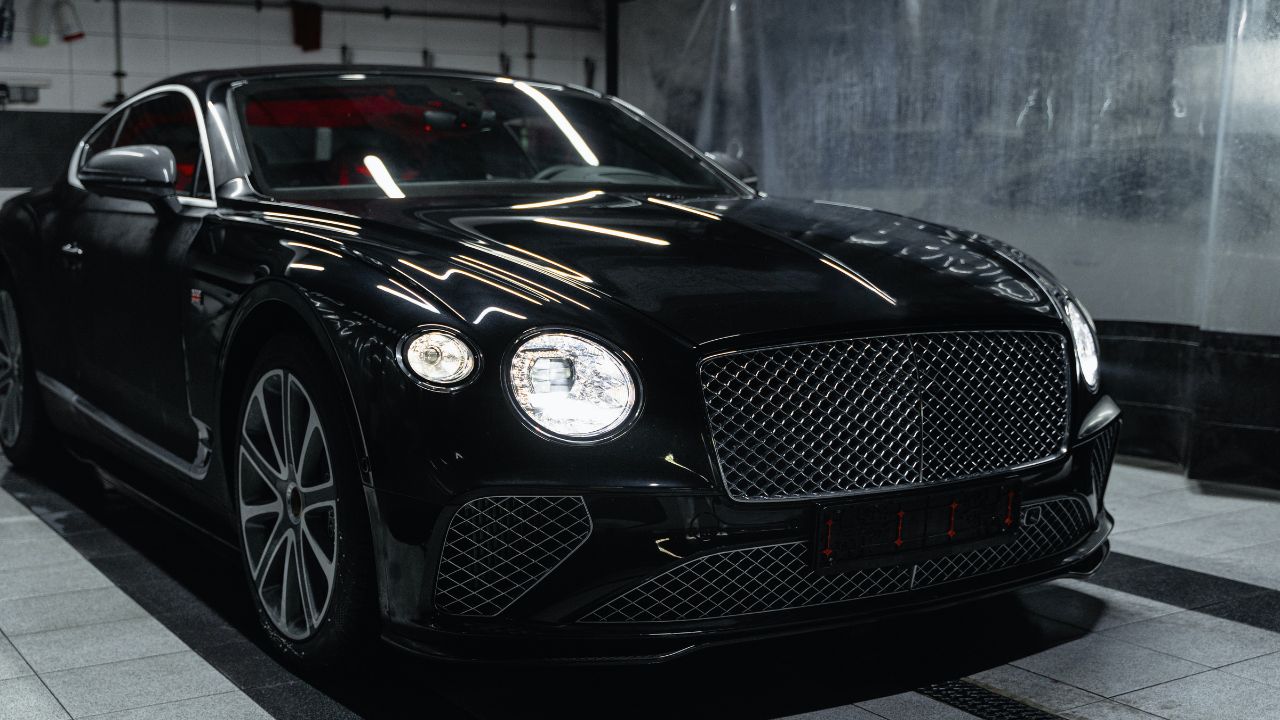
A luxury vehicle diminished value claim succeeds or fails on the strength of its evidence, and you generally need five categories of proof. Even when repairs restore a high-value vehicle to pristine condition, buyers in the luxury segment demand flawless accident histories, and any collision record drives a measurable price drop that insurers rarely volunteer to compensate for.
This article explains what evidence for diminished value claim documentation proves your loss, how each type is valued by insurers and courts, how to gather it systematically, and how professional documentation changes your settlement. Strong evidence is what separates a lowball formula offer from full recovery on a six-figure vehicle.
Key Takeaways
- A successful luxury vehicle diminished value claim requires five evidence categories: an independent USPAP-compliant appraisal, complete repair records, before-and-after photographs, comparable market sales data, and qualified appraiser testimony.
- The 17c formula severely undervalues luxury vehicles by capping loss at 10% of pre-loss value, while market-based USPAP appraisals capture true resale impact.
- Independent professional appraisals cost $300–$500 for standard vehicles and higher for luxury models, but they typically yield settlements three to five times larger than 17c offers.
- California requires claimants to prove diminished value through third-party claims, and the three-year statute of limitations starts from the accident date.
- Documentation must begin at the accident scene and continue through certified luxury collision repairs, post-repair photography, and independent appraisal before accepting any settlement offer.
What Is a Luxury Vehicle Diminished Value Claim?
A luxury vehicle diminished value claim is the legal demand for the difference between your vehicle’s market value immediately after the accident and its market value immediately after repairs are completed. In California, this loss is a recoverable element of property damage when another driver’s negligence caused the collision.
Luxury and exotic vehicles lose more value per accident than mainstream cars because discerning buyers pay a premium for pristine ownership history. A single accident notation on a Carfax report for a Ferrari or Lamborghini triggers a steeper depreciation curve than the same notation on a mass-market sedan.
First-Party Vs. Third-Party Diminished Value Claims
First-party claims are filed by the vehicle owner against their own collision coverage. Third-party claims are filed against the at-fault driver’s liability insurer and represent the more common recovery path in California after another driver’s negligence.
Why Diminished Value Hits High-End Vehicles Harder
Limited comparable inventory and brand prestige magnify the loss when luxury vehicles carry accident records. A routine claim on a mid-range sedan might result in a modest four-figure recovery, while luxury and exotic claims routinely reach five and six figures, which is exactly why California claim documentation quality matters so much.
What Evidence Do You Need for a Diminished Value Claim?
To prove a luxury vehicle diminished value claim, you generally need five categories of evidence: an independent USPAP-compliant appraisal, complete repair records, before-and-after photographs, comparable market sales data, and qualified appraiser testimony. Each category serves a distinct function, and combining them creates a claim insurers cannot easily dismiss.
1. An Independent USPAP-Compliant Appraisal
An independent USPAP-compliant appraisal is the single most persuasive piece of evidence in any diminished value claim. USPAP refers to the Uniform Standards of Professional Appraisal Practice, a framework established by The Appraisal Foundation to ensure consistent, defensible methodology.
A certified appraiser performs the valuation and produces court-ready documentation of the value loss. This appraisal serves as the anchor for your entire claim and provides the most credible counter to insurer lowball tactics.
2. Repair Records and Post-Repair Documentation
Complete repair documentation includes the full estimate and final invoice from a certified luxury collision center. The records must contain an itemized list separating structural repairs from cosmetic work, as structural damage typically drives a higher diminished value.
Repair bills prove what was fixed and the severity of the damage. They cannot, however, stand alone to prove market value loss, which is why they must pair with an independent appraisal.
3. Before-and-After Photographs
Pre-accident condition photos and detailed post-repair images document the vehicle’s visual state before and after the collision. These photographs support your narrative and provide visual context for appraisers, adjusters, and potentially judges.
Photos are inherently subjective and may not reveal underlying structural damage. They support but never replace professional appraisal in proving actual market value loss.
4. Comparable Market Sales Data
Real sales of similar make, model, trim, and mileage—with and without accident history—demonstrate the price gap buyers impose on collision-affected vehicles. This data provides objective proof of the stigma penalty luxury brands suffer in resale markets.
Finding exact comparables for limited-production exotic models is challenging. Market sales data pairs with professional appraisal to create the strongest possible foundation when handling high-end vehicle loss evidence requirements.
5. Qualified Appraiser Testimony
A certified appraiser who can explain and defend the valuation methodology becomes critical when insurers challenge your claim or the matter moves toward litigation. Under California Evidence Code §720, qualified witnesses may provide testimony on specialized subjects beyond common knowledge.
Appraiser testimony proves most valuable when an insurer disputes the appraisal or refuses a reasonable settlement. Legal counsel coordinates this testimony as part of formal dispute resolution or trial preparation.
Evidence Checklist:
- Independent USPAP-compliant appraisal
- Complete repair records (estimate + final invoice)
- Before-and-after photographs
- Comparable market sales data
- Qualified appraiser availability
How Strong Is Each Type of Evidence, and What Does It Cost?
The evidence types are not equal in weight or cost, so building the strongest claim means combining them strategically. Professional appraisals carry the highest credibility but also the highest expense, while repair documentation costs nothing but proves limited facts.
| Evidence Type | What It Proves | Key Limitation | Typical Cost |
| Professional USPAP Appraisal | Precise market value loss using a defensible methodology | Higher cost; requires a certified appraiser | $300–$500 standard; higher for luxury/exotic |
| Repair Documentation | Damage severity and repair scope | Does not prove market value loss | Free from the collision center |
| Comparable Sales Data | Real-world buyer behavior and price gaps | Hard to find exact luxury matches | Free to $100 |
| Before/After Photos | Visual condition documentation | Subjective; misses structural damage | Free |
| Qualified Appraiser Testimony | Professional defense of valuation in disputes | Very expensive; needed only in litigation | $1,000–$5,000+ |
The appraisal is the anchor that establishes credibility; everything else corroborates it. In many cases, spending roughly $500 on a professional valuation can yield settlements meaningfully larger than relying on free evidence alone.
How Are Luxury Vehicle Diminished Value Claims Appraised?
Luxury claims are appraised in one of two ways, and the method an insurer uses dramatically changes your payout. Insurers default to formulas that minimize expense, while independent appraisers use market-based methodologies that capture true loss.
Why the 17c Formula Shortchanges Luxury Vehicles
The 17c formula traces to a 2001 Georgia case and caps diminished value at 10% of pre-loss value before applying damage severity and mileage multipliers. It is built to minimize payouts and severely undervalues luxury and exotic vehicles where actual market stigma exceeds the formula’s artificial ceiling.
Insurers often default to 17c because it produces the lowest defensible number. This is precisely why low-ball offers appear so quickly after luxury vehicle accidents.
How Market-Based Appraisal Works
Market-based appraisal uses real-world comparable sales to measure actual loss by comparing recent transactions of similar vehicles with and without accident histories. This method is more accurate for high-value vehicles but requires extensive research and documentation.
Insurers sometimes challenge market-based appraisals because they produce higher valuations. Professional appraisers counter these challenges with transaction records and statistical analysis.
Why a USPAP-Compliant Appraisal Is the Strongest Basis
USPAP compliance follows rigorous standards that ensure consistent methodology and produce documentation that holds up under scrutiny in negotiations and litigation. The framework requires certified appraisers to document assumptions, research, and conclusions in a format courts recognize.
A USPAP-compliant appraisal is the most credible counter to a 17c lowball. It transforms your claim from a negotiation based on insurer convenience into one grounded in professional valuation standards.
How Do You Gather and Document the Evidence, Step by Step?
Gathering auto accident evidence collection starts at the scene and continues through repairs and independent appraisal—in that order. Each step builds the foundation for the next, and skipping any phase weakens your eventual claim.
Step 1: Document the Pre-Accident Condition
Obtain the police report at the accident scene and ensure all parties’ information is recorded accurately. Photograph the scene from multiple angles and capture detailed images of your vehicle immediately after impact.
Arrange independent tow and storage if you distrust the at-fault party’s insurer. This preserves your vehicle’s condition and prevents premature repair authorizations that might obscure evidence.
Step 2: Preserve, Repair, and Post-Repair Records
Choose a certified luxury collision center experienced with your vehicle’s make and model. Keep every estimate, supplement, and final invoice, with particular attention to itemized structural repair records.
Take detailed post-repair photographs showing the completed work. These images establish that repairs were performed to manufacturer standards and provide before-and-after documentation for appraisers.
Step 3: Get an Independent Appraisal Before You Settle
Hire an independent, USPAP-certified appraiser before accepting any offer from the at-fault party’s insurer. The appraiser will compile comparable market data alongside the formal valuation to support the documented loss.
California insurers operate under Fair Claims Settlement Practices Regulations requiring timely responses, but property damage claims carry a three-year statute of limitations from the accident date. Securing luxury car proof documents early preserves your legal options while maintaining negotiation leverage through professional diminished value after an accident documentation.
How Does Strong Evidence Affect Your Settlement?
Strong, professionally documented evidence is what separates a 17c lowball from full recovery. Insurers dismiss claims supported only by repair bills or dealer trade-in quotes because those documents prove limited facts, but they cannot ignore a USPAP-compliant appraisal backed by market sales data.
Why a Professional Appraisal Raises Settlement Value
A documented, independent appraisal gives the insurer no easy way to dismiss the loss without challenging the appraiser’s credentials or methodology. Insurers know that well-documented claims withstand litigation scrutiny, which shifts their calculation from “minimum defensible offer” to “reasonable settlement to avoid trial expense.”
Documented patterns from successful settlements for diminished value and loss of use cases show that professional appraisals routinely yield settlements three to five times larger than initial 17c offers.
How to Counter a Lowball 17c Offer
Reject the initial 17c-based offer in writing and respond with a structured demand letter backed by your independent appraisal and market data. The demand should explain why the 17c formula fails to capture actual market loss on luxury vehicles.
Accepting the first offer or relying solely on repair bills leaves substantial money on the table. Dealer trade-in quotes are similarly inadequate because they reflect wholesale values influenced by factors beyond accident history.
Illustrative California Recovery Examples
California outcomes demonstrate the impact of professional documentation on luxury vehicle claims. A 2020 Ford GT owner recovered $250,000 through a USPAP-compliant appraisal after Federated Services initially offered a fraction of that amount based on formula calculations.
A 2022 Ferrari SF90 Stradale claim against CSAA resulted in a $120,000 recovery, while a 2015 Ferrari 458 Italia claim against AAA yielded $153,837. These illustrative examples show how documented evidence drives results, though outcomes vary based on specific facts and damage severity.
How Kerr Law Firm Helps You Build a Strong Diminished Value Claim
An experienced diminished value attorney coordinates the appraisal, documentation, and negotiation so your evidence does its job. Kerr Law Firm has represented luxury and exotic vehicle owners in Orange County diminished value claim cases for over 45 years, handling the full claim process from initial appraisal coordination through final settlement.
Skilled counsel manages the demand letter preparation, insurer negotiation, and litigation if necessary. The firm operates on a contingency fee basis, advancing all costs, including appraisal fees, so you pay nothing unless there is a recovery.
Whether your vehicle was damaged in Anaheim or elsewhere in Orange County, experienced attorneys understand how to counter insurer tactics and present evidence that insurers cannot dismiss. A free case evaluation determines whether your claim justifies professional representation and establishes realistic recovery expectations.
Protect Your Recovery with Kerr Law Firm’s Skilled Diminished Value Counsel
The evidence behind a luxury vehicle diminished value claim only works when it is gathered correctly and presented by someone who knows how insurers fight back. At Kerr Law Firm, our experienced Orange County attorneys have spent more than 45 years coordinating USPAP-compliant appraisals, building market-based documentation, and countering 17c lowball offers on behalf of luxury and exotic vehicle owners.
We handle the entire claim, from appraisal coordination and demand letters through negotiation and, when necessary, litigation. Because we work on a contingency fee basis and advance all costs, including appraisal fees, you pay nothing unless we secure a recovery.
Timing matters. In California, property damage claims, including diminished value, are generally subject to a three-year statute of limitations from the date of the accident, and evidence is strongest when documented early. Waiting can quietly weaken an otherwise strong claim.
Schedule your free case evaluation with Kerr Law Firm today, and let our skilled counsel help you determine what your claim is worth and how to pursue the full value of your loss.
